SOUTHEAST ASIA'S EXCLUSIVE EMPORIUM FOR OVERWATER BASS GUITARS

The Impact of Bass Guitar Weight on Tone
A commonly debated topic
9/10/20253 min read

Understanding the Weight of a Bass Guitar
The weight of a bass guitar actually plays a significant role in the instrument's overall tone. Bass guitars can vary widely in weight depending on the type of wood used for their bodies, the hardware, and even the finish. Each of these factors contributes to how the guitar resonates and, ultimately, how it sounds when played.
How Weight Influences Tone
The science behind why weight affects tone involves several factors, including resonance, sustain, and harmonic content. Heavier bass guitars tend to have a denser body, enabling them to produce deeper and richer tones. This added weight can increase sustain, allowing notes to linger longer. Conversely, lighter basses may offer a snappier attack with a more punchy tone, which can be beneficial in certain musical styles.
The weight of a bass guitar is essentially the density of the wood used for the body and neck. The density of the wood influences how the string vibrations are absorbed, reflected, or sustained by the instrument. Empirically, I would say the following are common observations:
1. Sustain
Heavier woods (e.g., ash, bubinga, mahogany) absorb less string energy and allow notes to ring longer. That’s why many heavy instruments are praised for sustain.
Lighter woods (e.g., alder, basswood, paulownia) dissipate energy more quickly, resulting in a faster attack but a shorter note decay.
2. Resonance & Frequency Response
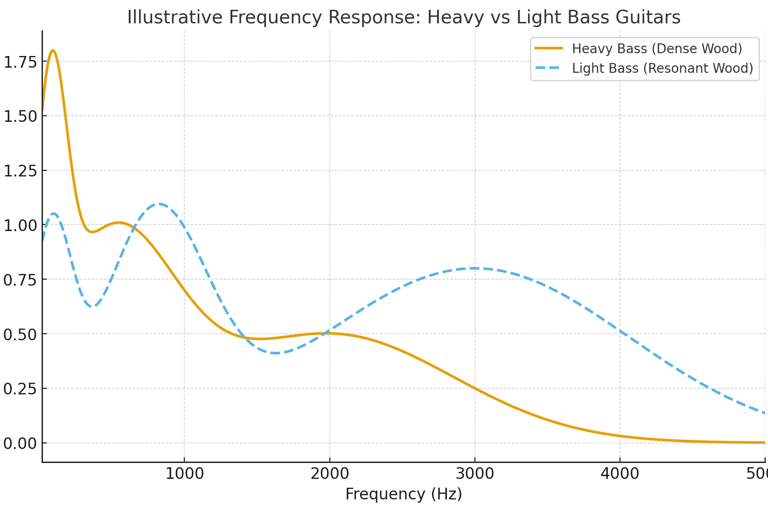
Dense/heavy bodies tend to emphasize low-mids and bass frequencies, producing a tighter, more controlled sound. They often give a “focused” or “compressed” quality.
Lighter bodies resonate more freely, which can enhance upper mids and high frequencies, creating an airy, open character.
One can think of it as:
Heavy bass → sustain, solidity, warmth, low-end punch
Light bass → liveliness, resonance, brightness, openness
3. Attack and Dynamics
Light basses: Notes often “pop” faster when plucked — a snappy, immediate response that some funk, pop, and slap players love.
Heavy basses: Tend to have a smoother, more gradual bloom of notes, which can feel more controlled in rock, metal, or jazz contexts.
4. Overtones & Harmonics
A lighter, more resonant bass often emphasizes overtones, giving the instrument a complex, woody character.
A heavier, denser bass usually emphasizes fundamentals, giving a purer, more direct note with fewer “ringy” harmonics.
5. Real World Examples
Fender Jazz Bass (’70s ash bodies) → Often quite heavy, known for long sustain, strong low-mid growl.
Music Man Stingray (ash or heavy alder) → Heavier models give that tight, punchy attack with deep lows.
Warwick Thumb (bubinga, ovangkol) → Very heavy, but delivers massive sustain and low-mid punch.
Sadowsky NYC (chambered bodies) → Lightweight, resonates more, often described as “airy” with a quick, open attack.
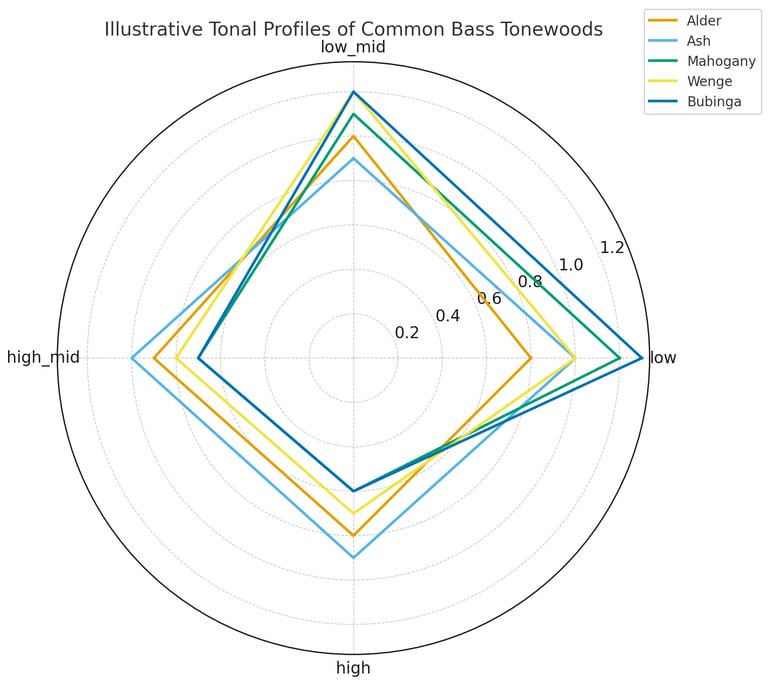
Here’s a radar chart of common bass tonewoods showing their typical tonal tendencies and a rough picture where each wood "sits" tonally:
Alder → Balanced across the spectrum, smooth mids, versatile.
Ash → Strong lows and highs, slightly scooped mids, bright and snappy.
Mahogany → Warm with boosted lows and low-mids, softer highs.
Wenge → Emphasized low-mids, tight and growly, darker top end.
Bubinga → Very dense, strong lows and low-mids, focused, less sparkle on top.
Moreover, the neck of the bass guitar and the type of pickups used also contribute to the overall tonal characteristics. A heavier neck can add to a fuller sound, while different types of pickups can affect how the strings vibrate, producing varied sonic results. As such, players should consider both the weight and material composition of a bass guitar when evaluating its tonal capabilities.
In summary, the weight of a bass guitar is a crucial factor that intertwines with its tone production. Players should be mindful of how different weights and materials can influence their sound, allowing them to choose an instrument that best fits their musical style. Whether you prefer the warm depth of a heavier bass or the bright clarity of a lighter instrument, understanding the science behind the weight and tone will enhance your playing experience.